
Childhood Immunization Schedule by Age: A Complete Vaccine Guide for Parents
Approved & Verified by Health Landclinic
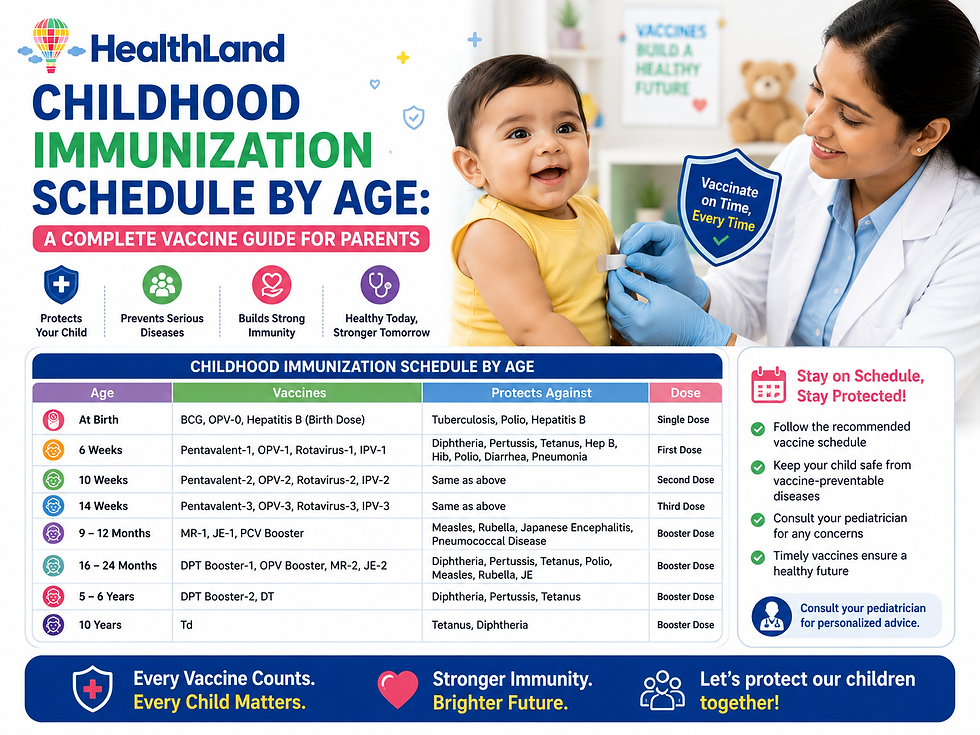
About 94% of kindergartners in the U.S. have their core vaccinations up to date, according to the CDC. So most parents are clearly getting it done. But figuring out which shots happen when and why - that part can still feel like a lot, especially when you're sleep-deprived and scrolling through a dozen contradictory opinions online.
I've talked to enough parents to know: if you've ever squinted at a printout from your pediatrician's office trying to decode "DTaP" or wondered why your baby apparently needs four doses of the same thing, you're in good company. The childhood immunization schedule looks intimidating on paper. But once somebody lays it out in plain language, it actually makes a lot of sense.
That's what this guide is for. No unexplained medical jargon. No fear-mongering. Just a straightforward, age-by-age breakdown of the recommended vaccines for kids, what each one does, and what to expect at every appointment. Whether you're expecting and trying to plan ahead, a grandparent helping with care, or a first-time parent trying to keep everything straight, bookmark this page.
And if you want more detail on your baby's first-year health milestones, we cover that separately.
What Is the Childhood Immunization Schedule?
The childhood immunization schedule is a set of age-based vaccine recommendations that the CDC, the American Academy of Pediatrics (AAP), and the Advisory Committee on Immunization Practices (ACIP) publish and update every year. It covers everything from birth through age 18.
Here's the short version:
Birth: Hepatitis B (first dose)
2 months: DTaP, IPV, Hib, PCV15, RV, HepB (second dose)
4 months: DTaP, IPV, Hib, PCV15, RV (second doses)
6 months: DTaP, PCV15, RV (third doses), HepB (third dose), flu vaccine (annually from here on)
12 to 15 months: MMR, Varicella, HepA, PCV15 (booster), Hib (booster)
4 to 6 years: DTaP, IPV, MMR, Varicella (boosters)
11 to 12 years: Tdap, HPV, MenACWY
That's the skeleton. Now let's flesh it out.
Baby Vaccination Schedule: Birth Through 6 Months
This stretch is the busiest. Your baby's immune system is brand new, and the vaccines given during these early months target diseases that hit infants the hardest.
Birth: Hepatitis B (HepB, Dose 1)
Most babies get their first HepB shot within 24 hours of being born. Hepatitis B can lead to chronic liver disease, and here's the scary part - infants who catch it have a 90% chance of developing a chronic infection. That's why the first dose happens so early. The stakes are just too high to wait.
2 Months: The Big Visit
This is the appointment that catches a lot of new parents off guard. It involves the most shots at once. Your baby will typically get:
DTaP (diphtheria, tetanus, pertussis)
IPV (polio)
Hib (Haemophilus influenzae type b)
PCV15 (pneumococcal)
RV (rotavirus, given by mouth)
HepB (dose 2)
Yeah, it's a lot. I get why parents feel uneasy. But decades of safety data, including studies with hundreds of thousands of children, consistently show that giving these vaccines together is safe and effective. And here's what most people miss: spacing them out actually leaves your baby unprotected longer during the exact window when they're most at risk.
4 and 6 Months: Building Up Protection
These visits are follow-ups. Most of the same vaccines get their second and third doses. Think of it like building a wall, one brick at a time. The first dose kicks off the immune response. The follow-up doses make it strong and long-lasting. At 6 months, your baby also becomes eligible for the annual flu vaccine, and honestly, that's one I think every parent should take seriously.
Child Vaccine Schedule: 12 Months to 6 Years
The pace slows down here. Fewer visits, but some important new vaccines come into play.
12 to 15 Months: New Protections
This is when your child gets their first doses of:
MMR (measles, mumps, rubella)
Varicella (chickenpox)
HepA (hepatitis A, dose 1; dose 2 follows about six months later)
They'll also get booster shots for PCV15 and Hib. The MMR vaccine is probably one of the most studied vaccines in history at this point. A 2019 study in the Annals of Internal Medicine looked at over 650,000 Danish children and found no increased risk of autism. That myth should be dead and buried by now.
4 to 6 Years: Pre-School Boosters
Before kindergarten, your child needs booster doses of DTaP, IPV, MMR, and Varicella. A lot of schools won't let kids enroll without proof of these. Pro tip: ask your pediatrician for an updated immunization record at this visit and keep a copy at home. You'll thank yourself later.
Vaccines by Age for Children: The Pre-Teen and Teen Years
11 to 12 Years: A Window You Don't Want to Miss
Tdap: booster for tetanus, diphtheria, and pertussis
HPV: protects against cancers caused by human papillomavirus (works best when given at 11 or 12 because the immune response is strongest)
MenACWY: meningococcal vaccine (with a booster at 16)
HPV vaccination is one of the most effective cancer prevention tools that exists. The CDC reports that HPV infections and cervical precancers have dropped by 88% among teen girls since the vaccine became available. If your child is approaching this age, please don't skip it.
For more on supporting your child's overall wellness during the school years, that's worth reading alongside this schedule.
Practical Tips for Staying on Track
Keeping up with the pediatric immunization guide doesn't take a medical degree. It takes a system.
Check your state's immunization registry. Most states have an online database where you can pull up your child's vaccine history. Ask your pediatrician if they report to it.
Set reminders on your phone. After each well-child visit, schedule the next one right away and set a reminder for a week before.
Keep a paper copy. Digital records are great until they're not. A physical copy of your child's immunization card tucked somewhere safe will save you headaches during school enrollment or travel.
Ask about combination vaccines. Shots like Pediarix (DTaP + IPV + HepB combined) reduce the total number of injections per visit. Your pediatrician can explain the options.
Don't freak out if you've fallen behind. The CDC publishes a catch-up schedule for kids who've missed doses. It's never too late to get current.
What Most Parents Get Wrong About the Childhood Immunization Schedule
In my experience, these are the things that trip parents up the most:
Assuming "natural immunity" is always the better option. For some diseases, sure, getting infected does create immunity. But the price of getting there can be devastating. Measles can cause brain swelling. Whooping cough can kill infants. Vaccines give you the immunity without the gamble.
Pushing vaccines back to "spread them out." I understand the instinct. It feels like you're being gentler. But it's actually riskier. Alternative schedules create gaps where your child has zero protection. The recommended timeline is built around when kids are most vulnerable, not around what feels comfortable.
Mistaking side effects for something dangerous. A fussy baby running a mild fever after their 2-month shots? That's a normal immune response. That's the vaccine doing its job. Serious reactions are extremely rare - roughly 1 in a million doses for most vaccines.
Forgetting about boosters. The initial series gets all the attention, but boosters are what keep immunity strong through childhood and into the teen years. Put them on your calendar.
A Real Scenario: What Catching Up Looks Like
Say your toddler is 18 months old and missed their 12-month vaccines. Maybe you moved. Maybe the pandemic threw everything off. Maybe life just got in the way. Here's what actually happens: your pediatrician pulls up the CDC's catch-up immunization schedule, figures out which doses are overdue, and puts together a plan to get your child caught up - usually within two or three visits.
Nobody's going to lecture you. Pediatricians see this all the time. What matters is that you showed up. Your child's immune system responds just as well to a slightly delayed schedule. The important thing is finishing it.
If you're also figuring out starting solid foods alongside these early visits, know that the two things don't conflict at all. You don't need to delay vaccines because of dietary changes.
Frequently Asked Questions
1. How many vaccines does a child get by age 2?
By age 2, most kids will have gotten about 28 doses covering 14 different diseases. That number sounds like a lot, and I get why it raises eyebrows. But many of those are repeat doses of the same vaccine, each one building stronger protection than the last. Every one of them has been rigorously tested for safety when given together.
2. Can I delay my baby's vaccination schedule?
Technically, yes. But pediatric experts strongly recommend against it. The baby vaccination schedule is timed to protect your child during the window when they're most likely to get seriously sick. Delaying creates gaps in protection with no proven upside. If you have specific worries, talk them through with your pediatrician rather than changing the schedule on your own.
3. What if my child has a mild cold on vaccine day?
A mild cold, low-grade fever, or ear infection usually isn't a reason to postpone. Both the CDC and AAP confirm that kids with minor illnesses can safely get their shots on schedule. If your child has a high fever or something more serious going on, your doctor might suggest waiting, but that's a case-by-case decision.
Staying on Schedule Protects Your Child and Your Community
The childhood immunization schedule isn't just a to-do list. It's decades of science compressed into a timeline designed to give your kid the strongest possible start. Every dose, every booster, every well-child visit adds another layer of defense against diseases that used to put thousands of children in the hospital every year - or worse.
You don't need to memorize every abbreviation. You just need to show up, ask questions, and follow through. And if you've fallen behind or you're not sure where things stand, that's okay. Book an appointment with your pediatrician today to review your child's vaccine record and figure out a plan. It's one of the simplest and most meaningful things you can do as a parent.
Your kid is counting on you. You've got this.


Comments